Hiring a Destination Wedding Photographer: How It Actually Works
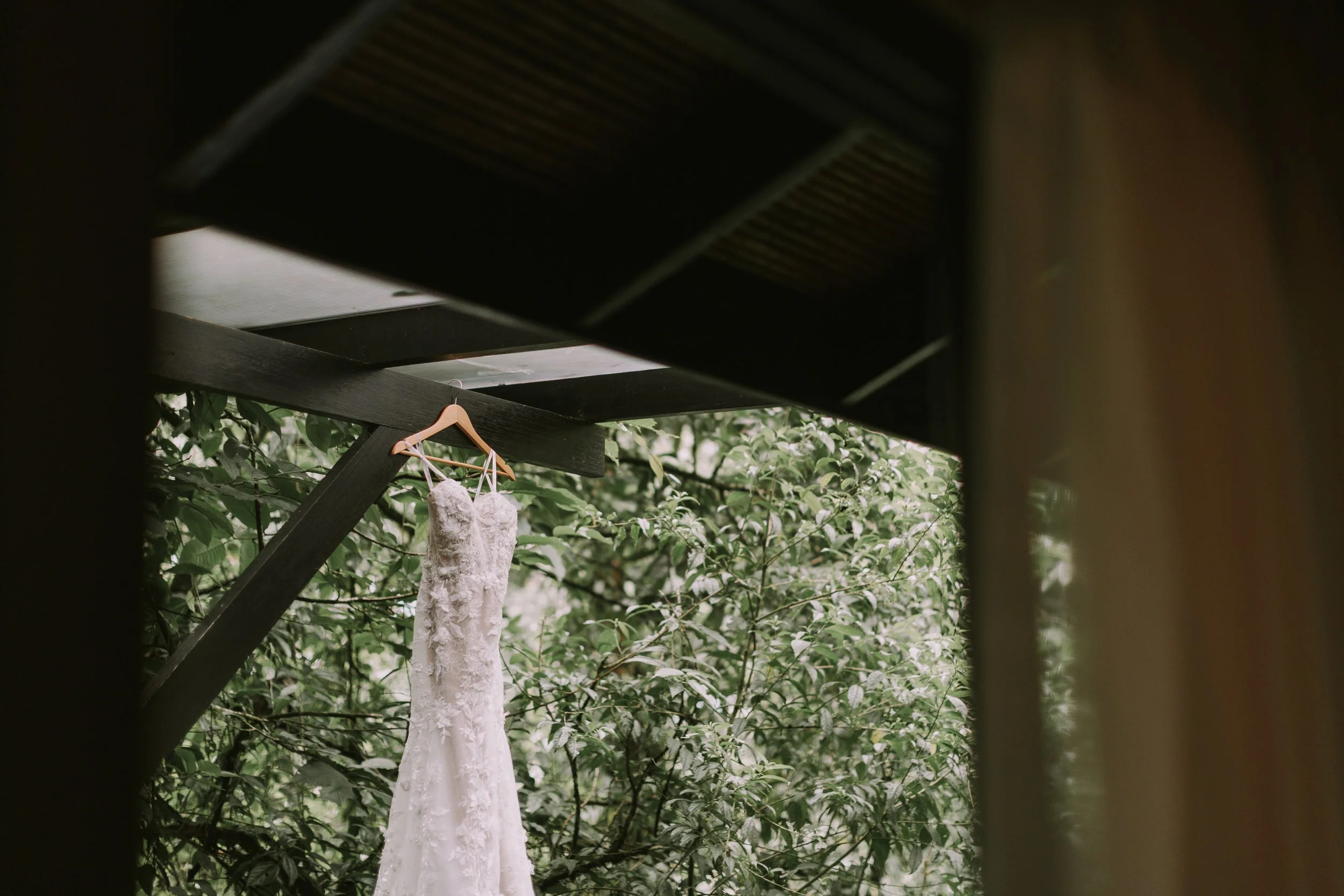
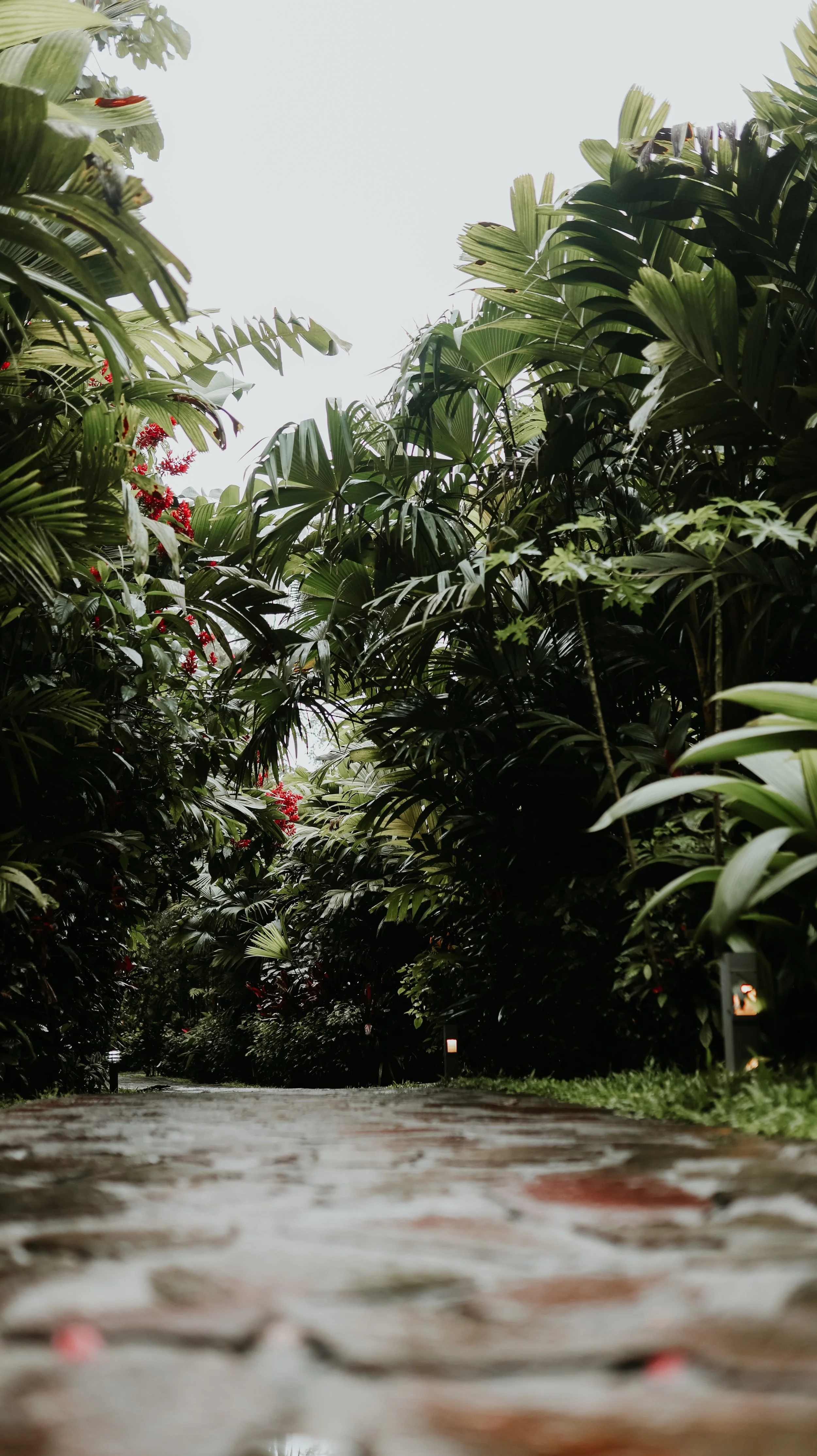
When Cesar and Emily married in Costa Rica, it rained that morning. The stone paths through the palms were still wet when Emily’s dress went up on a rafter over the rainforest, and by the ceremony the sky had cleared. None of that was luck. It was planning that started five months earlier, and it is the part of destination wedding photography couples ask us about most. Here is how the whole thing works, from the quote to the flight home.
How does destination wedding photography work?
You hire the photographer, and the photographer handles the travel. We quote destination weddings as one custom figure, typically $18,000 and up, with flights, lodging, and ground transport already inside it. We land at least 24 hours before the ceremony, scout the site that evening, photograph the wedding, and deliver your gallery on the same terms as an Austin one.
Everything you would get from us in Texas travels with us. Same two photographers, Allie and me. Same editing, same gallery. The only structural differences are the travel logistics, which we absorb, and the timeline, which bends around the local sun instead of the Texas one. A destination wedding is not a different service. It is the same service in a place that requires two boarding passes, and the rest of this guide is the specifics of what those boarding passes change.
How much does a destination wedding photographer cost?
Destination weddings with us are custom, typically $18,000 and up. For comparison, our Austin wedding collections begin at $8,000, and the difference is days, not markup. A destination wedding holds us for three to four days, two round-trip flights, three nights of lodging, and coverage that usually spans a welcome dinner and a day-after session.
Here is what sits inside a typical destination quote:
| Inside the quote | What it covers |
|---|---|
| Coverage | The wedding day, usually the welcome dinner, often a day-after session |
| Flights | Two round trips, booked as soon as the contract is signed |
| Lodging | Three nights near the venue, arrival day through the day after |
| Ground transport | Rental car or transfers between airport, lodging, and venue |
| The buffer | A full day on site before anyone says a vow |
We quote one number on purpose. Some photographers price a base collection and then bill travel afterward, receipts attached, and the couple finds out what the wedding cost when the expense report lands. We think that is a bad way to treat people. You approve a single figure at contract, and nothing about our airfare, our hotel, or our rental car ever reaches your inbox again. If the flights cost more than we guessed, that is our problem. Full pricing context, including where $8,000 and $18,000 sit relative to each other, is on the pricing page.
Should you fly a photographer in or hire one locally?
Both are legitimate, and the honest math is narrower than couples expect. The hard travel inside our quote, flights, lodging, and ground, is usually $2,000 to $3,000 of the total. What flying someone in actually buys is certainty: you have seen the full galleries, met the people, and know exactly what arrives in your inbox eight countries later.
A good local photographer knows the venue and saves the airfare. The trade is that you are hiring from a website, in a market you cannot vet in person, sometimes across a language gap, and wedding portfolios everywhere show the best 30 frames, not the typical 800. When couples fly us in, they are usually solving three specific problems: they already know our work from an Austin wedding or an engagement session, they want one photographer across several events in different places, or they have been burned once before by a vendor they could not meet.
There is also a practical middle you should know about. Some venues abroad bundle a house photographer into the package. Ask to see three complete weddings from that photographer, start to finish, before you accept the bundle. If the full galleries hold up, take the savings without guilt. If the venue will only show highlight reels, that is your answer too. A destination wedding already carries enough variables. The photography should be the one thing you are certain about by the time you board.
Why do we arrive the day before the wedding?
Because a ceremony has no second take. We schedule our landing at least 24 hours before the ceremony, and 48 hours when the route involves a connection. The buffer absorbs a delayed or canceled flight, and it buys us an evening to walk the site at the exact hour you will be married the next day.
The scouting matters more than the insurance. Standing at the ceremony site at 4:00pm the day before tells us precisely where the light will fall at 4:00pm the day of, which side of the aisle goes backlit, and where portraits should happen 30 minutes after the last kiss. That is knowledge you cannot get from a venue’s website, and it is why the buffer day is inside every quote rather than an upgrade.
The gear rides with us, not under the plane. Two camera bodies and every lens fly carry-on, each frame is written to two cards at once, and files are backed up to two drives in separate bags every night we are away. A lost checked bag on a destination wedding costs us clothes, never cameras.
Do you need permits to photograph a wedding abroad?
Sometimes, and finding out is our job, not yours. Venues, municipalities, and parks each set their own rules. Some resorts charge outside-vendor fees, commonly $100 to $500, to admit a photographer the couple hired themselves. Some cities require a permit for photography with stands or lighting. Many national parks, in the US and abroad, require one for any paid shoot at all.
We research the rules for your specific venue and location about 60 days out, secure whatever is required, and fold any fee into the quote. Worth separating from photo permits: the legal side of marrying abroad is its own question, with document and residency requirements that vary by country, and the US State Department keeps a plain-language overview at travel.state.gov. Costa Rica is one of the friendlier answers, since a civil ceremony performed there is legally binding and recognized at home. Plenty of couples skip the paperwork abroad entirely, sign at a courthouse in Texas the week before, and hold the ceremony that counts in front of their people. The photographs do not know the difference.
How is a destination timeline different from an Austin one?
The sun sets earlier and faster. Costa Rica sits about ten degrees north of the equator, so sunset lands between roughly 5:15 and 6:00pm every day of the year, and usable light is gone about 20 minutes later (timeanddate.com). An Austin June wedding has light until 8:30pm. In the tropics, a 5:00pm ceremony start is already too late.
So the day shifts forward. Ceremony at 3:30 or 4:00pm, portraits immediately after in the last warm hour, dinner under string lights by 6:30. Tropical twilight is a closing door, not the long Texas fade, and a timeline that ignores it puts your portraits in the dark. The other shift is heat. Midday near the coast is brutal in a suit, so getting ready runs earlier and the gap before the ceremony gets spent indoors.
Destination coverage also spreads across days instead of stacking into one. A typical structure is an hour at the welcome dinner, eight hours on the wedding day, and a short day-after session at the beach or in town, which is gentler than the single 10 hour Austin marathon. The logic we use for hours still applies, and it is laid out in our coverage hours guide and the sample wedding day timeline. Destination just distributes the same hours differently.
What did photographing a wedding in Costa Rica teach us?
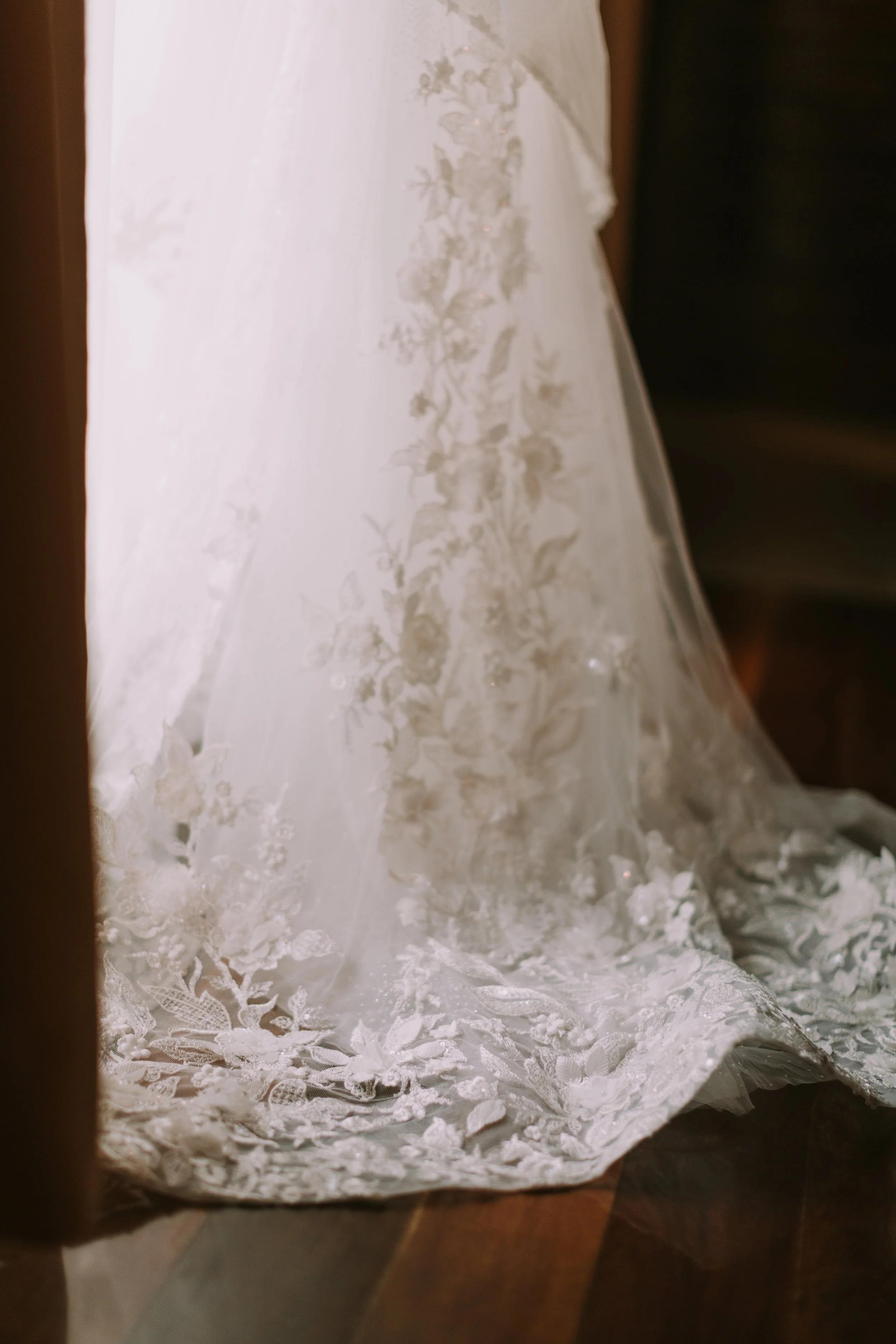
Cesar and Emily married in the green season, when Costa Rica trades afternoon rain for a jungle at full saturation. It taught us three things we now build into every destination quote. First, weather plans are hour-by-hour there, not day-by-day. The morning rain that soaked the stone paths was finished by noon, exactly as the local pattern predicted, and the covered walkways we had scouted the evening before never ended up mattering. Second, humidity is a gear problem with a clock on it. A lens carried from an air-conditioned room into jungle air fogs over for a good 20 minutes, so our cameras came out to acclimate an hour before Emily’s first photographs. Third, the rainforest is generous. The dress hanging against all of that green, the wet stone underfoot, the dark wood of the venue: the place did work an Austin ballroom cannot, and we mostly had to stay out of its way.
None of those lessons appear on an invoice. They are the reason the buffer day and the scouting walk are non-negotiable parts of how we quote, and the reason we would rather arrive a day early in every country than an hour late in one.
How do you book a destination wedding photographer?
Start earlier than you would for a hometown wedding, ideally 9 to 12 months out, because flights, lodging, and permits all get cheaper and easier with runway. The process with us runs six steps:
- Write to us with the date and the place. That is enough to check your date.
- We get on a video call and talk through the venue, the travel, and how many days of coverage the week actually needs.
- You receive one custom proposal, one figure. A signed contract and retainer holds the date.
- We book our own flights and lodging. You never see that logistics thread.
- About 60 days out, we build the timeline around the local sunset and confirm any permits or vendor fees with your venue.
- We land the day before, walk the site at ceremony hour, and go to work the next day.
We are based in Austin and photograph a limited number of destination weddings each year, in Costa Rica, on either coast, or wherever you decide to stand. The full picture of how we approach them, along with the work itself, is on the destination wedding photographer page. If your wedding requires a passport, we would like to hear about it.
Questions couples ask
How much does a destination wedding photographer cost?
Destination weddings are custom quotes, typically $18,000 and up. Our Austin collections begin at $8,000; the difference is days, not markup. A destination wedding holds us for three to four days and usually includes a welcome dinner and a day-after session alongside the wedding itself.
Do couples pay for the photographer's travel?
Yes, but not as a separate line you have to manage. Flights for both of us, three nights of lodging near the venue, and ground transport are folded into the single quoted figure. You approve one number at contract and never see a receipt afterward.
When does a destination photographer arrive?
The day before the ceremony at minimum, two days before when the route involves a connection. The buffer absorbs a delayed flight, and it gives us an evening to walk the ceremony site at the exact hour you will be married, so we know where the light falls.
Do you need permits to photograph a wedding abroad?
Sometimes. Some resorts charge outside-vendor fees of $100 to $500, some municipalities require photography permits, and many parks require one for any paid shoot. We research the rules for your venue and location about 60 days out and secure whatever is needed. That work is ours, not yours.
Is a destination wedding timeline different?
Usually, because of the sun. In the tropics, sunset lands between roughly 5:15 and 6:00pm all year and darkness follows within about 20 minutes, so ceremonies start at 3:30 or 4:00pm. Coverage also tends to spread across several days instead of one 8 hour block.