Should You Do a First Look? An Honest Take
Couples ask us this more than any other planning question. The honest answer is that there is no wrong choice. There is, however, a right choice for your specific day, and it usually comes down to arithmetic and light rather than philosophy. Here is how we walk our couples through it, with the actual numbers.
What is a first look, and what actually changes?
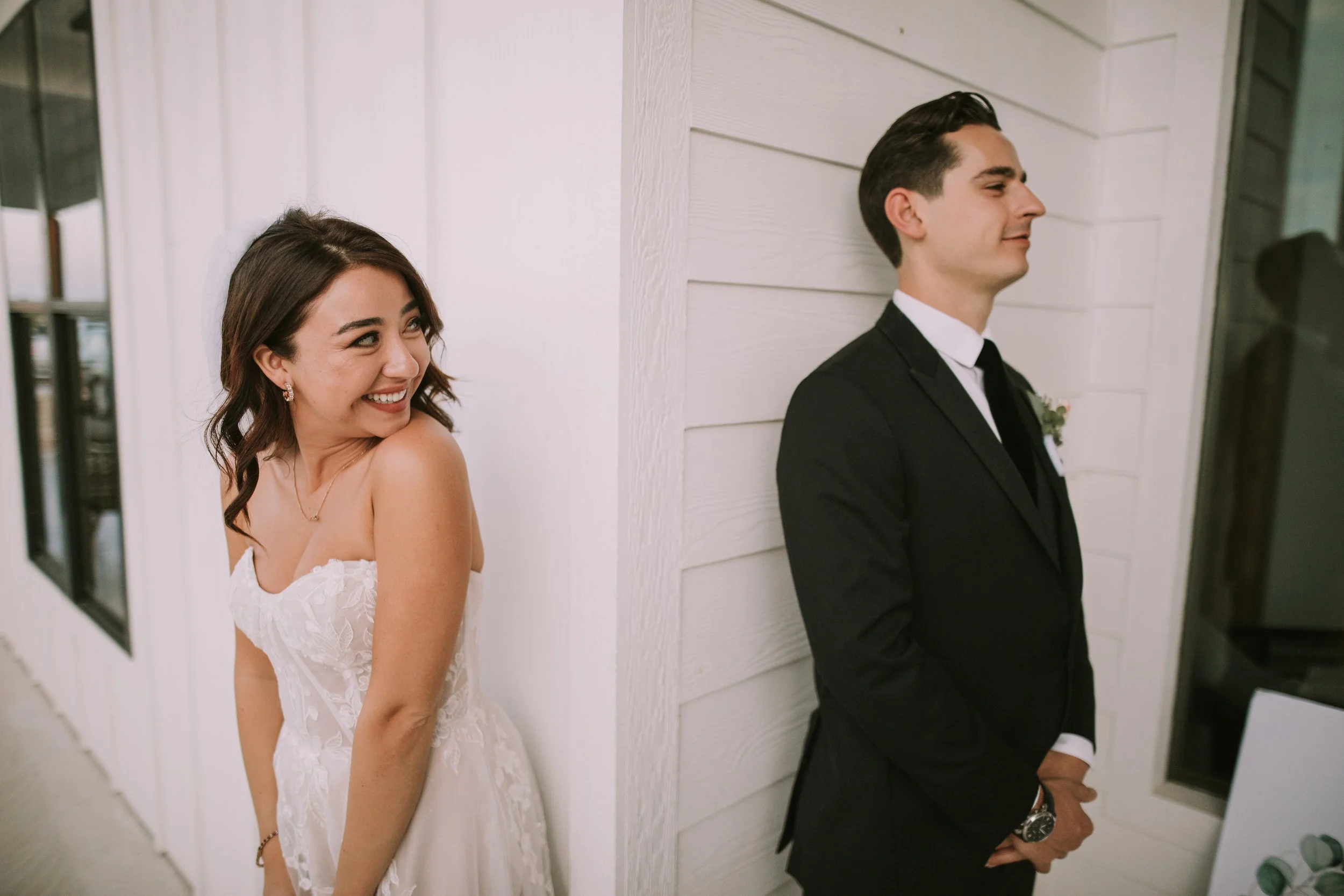
A first look is ten private minutes where you see each other before the ceremony, usually 2 to 3 hours ahead of guests. It moves 45 to 75 minutes of portraits from the post-ceremony crunch into a calm afternoon window. That is the whole decision: when do you want your portrait time to happen?
In practice, we set it up somewhere quiet, away from vendors and family. One of you waits, the other walks up. We stand far back on long lenses. Nobody directs anything for the first few minutes. Then, because you have already seen each other, we flow straight into couple portraits while your hair, makeup, and nerves are all at their best. By the time guests arrive, the two of you have already had 45 minutes together on your own wedding day. That is rarer than it sounds.
How does the timeline math compare, with and without?
On an 8 hour day with a 5:00 pm ceremony, a first look gives you roughly 75 minutes of portraits in the afternoon and lets you attend your cocktail hour. Without one, every portrait competes for the same 60 to 90 minutes after the ceremony, and cocktail hour is usually the casualty.
Here is the same day built both ways:
| Block | With a first look | Without one |
|---|---|---|
| Coverage window | 1:30 to 9:30 pm | 2:30 to 10:30 pm |
| First look + couple portraits | 3:00 pm, 45 minutes, unhurried | After vows, 25 minutes, clock running |
| Wedding party photos | 3:45 pm, 30 minutes | After vows, 20 minutes |
| Family formals | 5:35 pm, 20 minutes | 5:35 pm, 30 minutes |
| Cocktail hour, 6:00 to 7:00 | You attend most of it | You miss nearly all of it |
| Sunset portraits | Optional 10 minute step-out | Often your only couple time in good light |
Neither column is wrong. The right column is how weddings ran for generations. But notice what the left column buys: the same 8 hours of coverage produce about 50 additional minutes of portrait time, and you get to eat your own appetizers. We break the full day down hour by hour in our wedding day photography timeline guide, which pairs with everything here.
Guest count tilts the table further. Past about 150 guests, family formals stretch toward 40 minutes because there are simply more combinations, and the no-first-look column starts eating into the reception itself. Under 75 guests, both columns breathe. A first look also opens one quiet option we like: some couples read private vows during it, two or three minutes each, and keep the ceremony vows short and traditional. Nobody hears the private version but the two of you.
What does each choice do to your light?
Light decides more weddings than tradition does. In Austin, sunset lands near 8:35 pm in late June and near 5:30 pm in mid December. A 5:00 pm winter ceremony without a first look means most portraits happen after dark. A summer ceremony gives you slack either way.
This is the part couples underestimate. Check your date against a sunset table like timeanddate.com’s Austin page before you commit to a ceremony time. A late October wedding here has sunset around 6:45 pm. If your ceremony ends at 5:45 and family formals take 30 minutes, you have 30 minutes of usable light left, and the best of it, the low warm hour before sunset, is already half gone. With a first look, those same portraits happened at 3:00 pm and the sunset window becomes a bonus rather than a deadline. From November through January the math gets stricter: skip the first look with a 4:30 pm ceremony and you will do couple portraits by flash or not at all.
Do you lose the aisle moment if you see each other first?
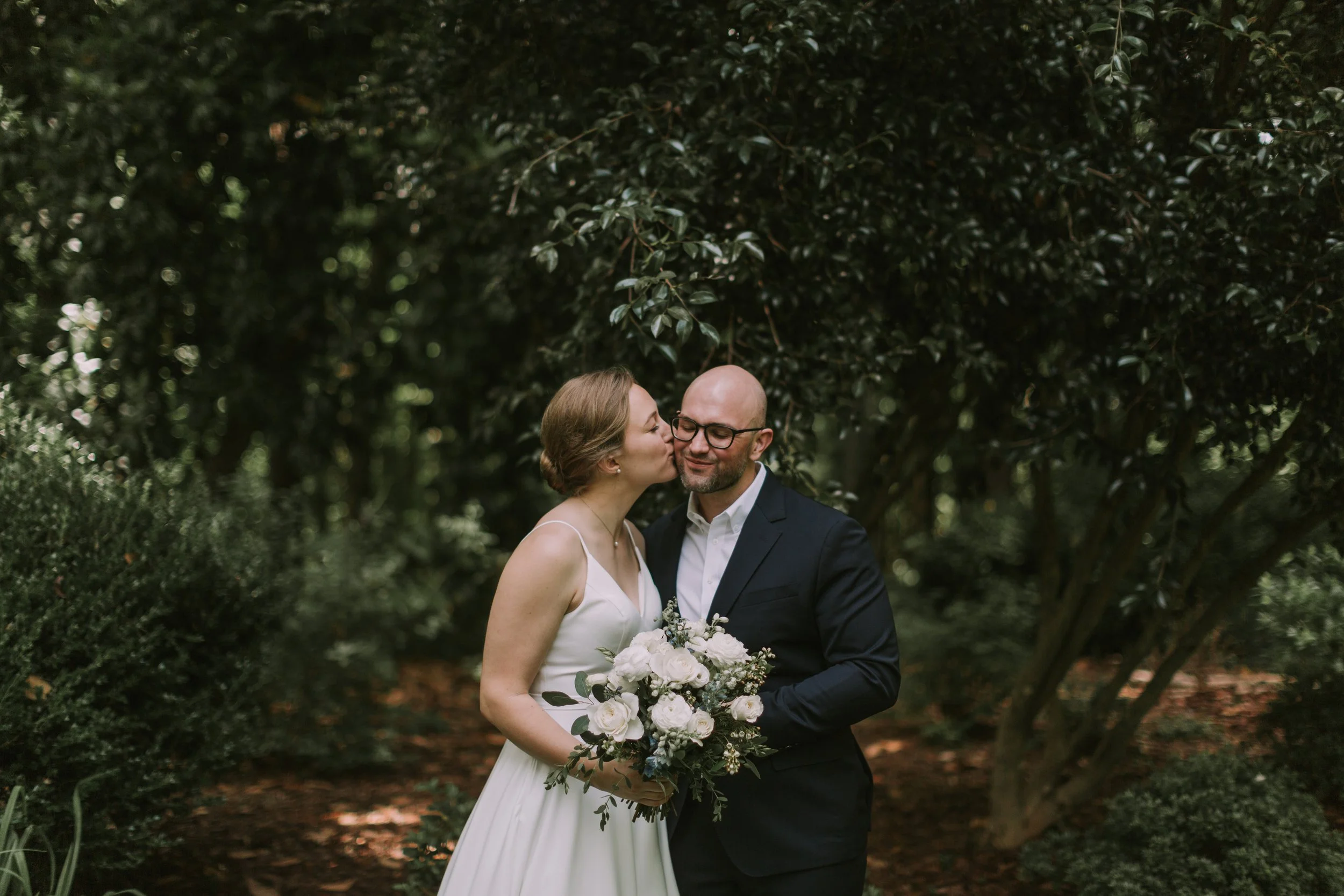
In our experience, no. We have never had a couple tell us the first look flattened the aisle. The two reactions are different, not ranked. The first look is private and unhurried, about ten minutes. The aisle is public and communal, about forty seconds. Couples who do both are glad they had both.
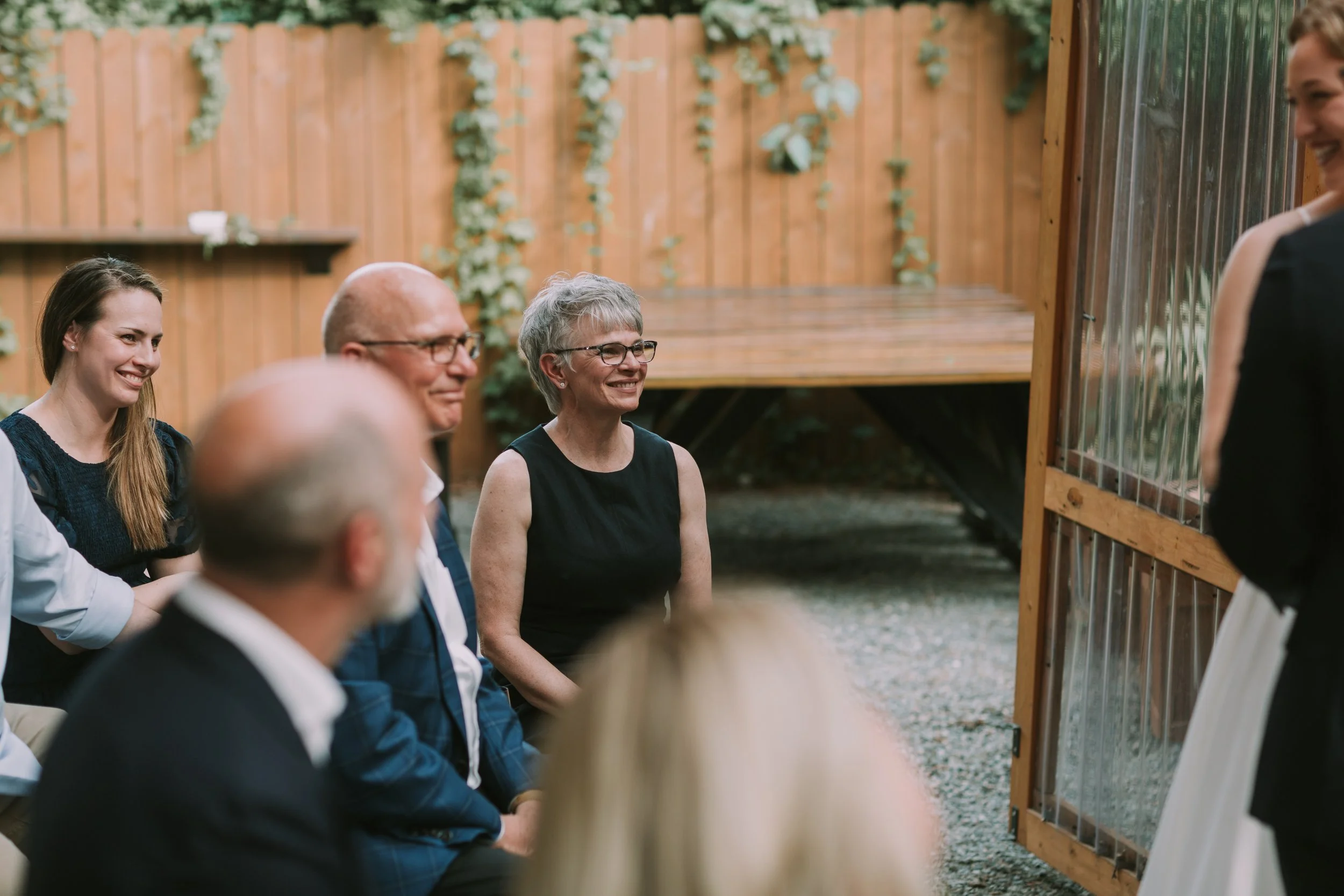
Here is the honest emotional trade. The aisle reaction is real either way, because the processional is not about surprise. It is about 120 people standing up, the music, your parents, and the fact that this is now actually happening. Grooms who worried the first look would drain it tell us afterward that the ceremony hit harder because the nerves were gone and they could be present. What you give up is the specific tradition of not seeing each other, and for some couples and families that carries real weight. The Knot’s guide to first looks covers the tradition’s history if you want the long version. What you gain is a private hour on a day that otherwise belongs to everyone else.
When do we tell couples to skip it?
Skip the first look when tradition genuinely matters to you, when your ceremony starts 3 or more hours before sunset, or when your guest list is small enough that family photos take 15 minutes. Those three cases cover almost every couple we have advised to wait for the aisle.
Expanded:
- The tradition matters to one of you. This outranks every scheduling argument. If either of you wants the aisle to be the first sight, that settles it. A first look that one partner was talked into photographs exactly like what it is.
- Your light survives without it. A 2:00 pm church ceremony in June leaves more than 6 hours of daylight afterward. The scheduling case for a first look mostly evaporates.
- Your wedding is small. With 40 guests and two families, formals take 15 minutes instead of 30, and a 75 minute post-ceremony window fits everything without cutting portraits short.
If two of the three apply to you, skip it with our blessing. We will build the timeline around a generous post-ceremony block and it will work. It works at a large wedding too, but something gets shorter, and it is almost always your portraits or your cocktail hour.
So what do we actually recommend?
Our honest position: roughly 7 of every 10 couples we photograph choose a first look, and none have regretted it. But we do not push it. We ask two questions. When is sunset, and how much do you care about the tradition? The timeline follows from the answers.
If sunset is within 90 minutes of your ceremony end and the tradition is not sacred to you, do the first look. If you have daylight to spare or the aisle-first tradition matters to either of you, skip it and protect a real post-ceremony portrait window. Both versions of the day can be photographed well. What cannot be photographed well is a timeline that pretends portraits take no time.
We plan this with every couple before we ever build a schedule. You can see how we structure full days on our Austin wedding photography page, and if you want us to run the math on your specific date and ceremony time, start there.
Questions couples ask
Does a first look ruin the ceremony reaction?
Not in our experience. The aisle reaction is different, not smaller. The first look is a private ten minutes; the processional is a public forty seconds. Couples who do both consistently tell us they are glad they had both.
How much time does a first look add to the day?
None. It uses the same coverage hours. It moves 45 to 75 minutes of portraits from the post-ceremony window to the early afternoon, which is what frees you to attend your cocktail hour.
What time should a first look happen?
About 2.5 to 3 hours before the ceremony. For a 5:00 pm ceremony we usually schedule it at 2:30, leaving 45 minutes for couple portraits and 30 for the wedding party before guests arrive.
Should we do a first look at a winter wedding?
Usually yes. Austin sunsets run near 5:30 pm from November through January, so a late-afternoon ceremony without a first look leaves little or no daylight for portraits.
What if one of us wants a first look and the other does not?
Skip it. The choice only works if both of you want it. A well-built timeline with a 75 minute post-ceremony window still covers everything. We plan that version often.